
 43.839° N, 10.248° E


Complete guide
Lecciona: beach guide
What the beach is like
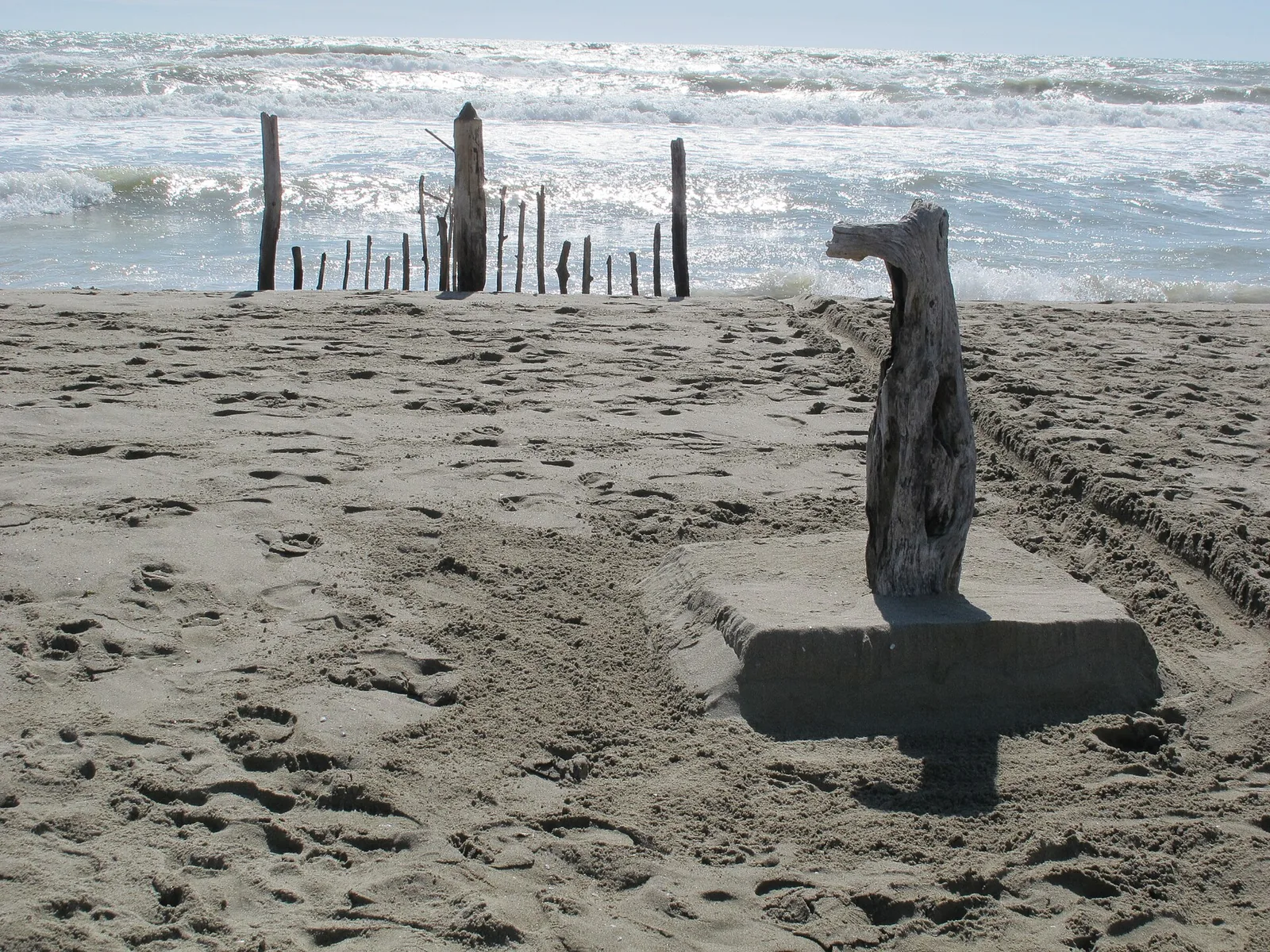
La Lecciona is a beach in the municipality of Viareggio, in the province of Lucca, within the Migliarino, San Rossore, Massaciuccoli park. It faces the Ligurian Sea. The beach still keeps its natural state, without human alterations. Wikipedia describes it, together with the Darsena di Viareggio, as the last beach close to Versilia that remains free and without any kind of facilities. It is one of the few stretches of sandy coast in Tuscany still in its natural state, with dunes covered by pioneer vegetation that consolidates them and counters erosion. The park's website calls it the most beautiful beach in its natural state within the park.
In a 2024 article published by the park, the director of the Centro Ornitologico Toscano explains that the few hundred metres of natural beach at La Lecciona are one of the last examples along the Italian coast of complete dune ecosystems, from the sea to the forests behind the dunes. Behind it, the coastal strip is bordered by dense woodland, mostly maritime pine (Pinus pinaster). In 2007-2008 the wetlands and marshes between the dunes and the pine forest were restored.
In the early '60s the area was granted to the Comune di Firenze to build a holiday village for municipal employees. The village had wooden bungalows, access to the beach and a central building with a shared canteen and all services. According to Wikipedia it was very successful, but after years of operation it was forced to close under strong pressure from the Socialist Party in the Comune di Viareggio.
Getting there
As the crow flies, Viareggio is 3.2 km north of the beach and Torre del Lago Puccini 3.7 km to the east. The trail of the La Lecciona nature reserve starts from viale dei Tigli, which links Viareggio to Torre del Lago Puccini, opposite Villa Borbone, and heads towards the sea as far as the coastal dunes. Villa Borbone houses a park visitor centre open all year round. The path was designed to be usable also by people with motor disabilities, with a compacted surface, wooden boardwalks to cross areas prone to flooding, information boards and a small observation point. In January 2024 the park authority announced that the trail, 1,400 metres long, had been upgraded and made safe with regional funding. In the same period the authority also renovated the wooden boardwalk leading to the beach in the Marina di Torre del Lago area. Viareggio can be reached by car on the A12 motorway, Viareggio exit, or along the via Aurelia, and by train at Viareggio station, on the La Spezia-Pisa line.
When to go
The beach faces west. With the south-west wind (libeccio), the west wind (ponente) and the north-west wind (maestrale), the wind blows in from the sea and the beach is exposed to waves. With the north-east wind (grecale), the east wind (levante) and the south-east wind (scirocco), the wind blows from the land and the beach is sheltered, with calmer water close to shore. The north wind (tramontana) and the south wind (ostro) hit it from the side. This is an indication based on the orientation of the coast, not a forecast.
According to Wikipedia, over the last ten years the beach has seen a sharp rise in visitors, drawn by its natural beauty and free access. Many come from the campsites, which are a few hundred metres away. The beach and dunes are a harsh environment for plants, with strong temperature swings between day and night, strong winds, very high evaporation and lack of water.
Seabed and sea
The beach is sandy. In the 2025 season the European Environment Agency rated the bathing water quality as excellent. Wikipedia, however, reports particularly dangerous conditions on this stretch, due to currents that differ from those of most beaches in the area. Anyone who is not a strong swimmer should stay within their depth and not go in when the sea is rough.
Facilities and free beach
The Comune di Viareggio had set up a lifeguard service from 2006, renewed every year through a tender and active during the summer. Since 2015 the service has not been active. Wikipedia stresses its importance because of the currents on this stretch and the large number of visitors. In 2026 the FEE Blue Flag list for the municipality of Viareggio includes Marina di Viareggio (Ponente/Levante) and Torre del Lago Puccini, while La Lecciona is not named on it. It is worth bringing water and some shade.
Rules and protected areas
Thanks to ANITA (Associazione Naturista Italiana), since 22 April 2022, under resolution no. 130 of the Comune di Viareggio, authorised naturism can be practised in the stretch between poles 13 and 15 without risking administrative fines. The park's regulations allow people to walk and stay only along the marked paths and on the shoreline. In 2024 the park's president asked visitors to use the official paths, which reach the water without trampling nesting areas, and to lay their towels by the water's edge or at most within the first 30 metres starting from the sea. He also asked people not to move driftwood and other natural elements, which protect the Kentish plover, and to keep pets from wandering off.
The Kentish plover (fratino) is a wader at risk of extinction at national level. It lays its eggs in a small hollow dug in the sand a few tens of metres from the shoreline, before the dunes proper. In spring 2024 volunteers from the Centro Ornitologico Toscano found a nest at La Lecciona, and the area was fenced off with posts and ropes and signposted. The Kentish plover had also nested at La Lecciona in 2018 and 2019, but only the 2018 nest produced a fledgling, while in the other cases nesting failed because of people and dogs. On the stabilised dunes grow curry plant scrub and stands of prickly juniper, a formation of great natural value and the main habitat targeted for conservation.
Nearby
The coastal route proposed by the park runs north-south for about 7 km, with a width ranging from 500 m in the Viareggio area to around fifty metres at the mouth of the Serchio, in the municipality of Vecchiano. Wooden boardwalks cross the dune environment and the wetlands behind the dunes in the reserve, rich in ponds. In the woods behind, tomboli with holm oaks and pines alternate with lame, hollows flooded for many months, with alders and ash trees, and intermediate zones with English oaks and poplars. Between via delle Viareggine and via della Sconfinata, small wooden bridges cross the large lame, hollows filled with water in winter. Before 1700 there was not a single pine here, but more varied vegetation on mostly marshy ground. The pine forests of the Versilia area were planted later on the old reclaimed marshes, to protect against sea winds and to provide timber and pine nuts.
The village of Torre del Lago Puccini lies on Lake Massaciuccoli, where the composer Giacomo Puccini bought a villa and stayed until the end of his life. Viareggio is known for its Art Nouveau architecture and its Carnival. The Viareggio Carnival takes place along the seafront promenade, in February every year.
Sources
- Wikipedia (it) — Spiaggia della Lecciona
- QualeSpiaggia — open data spiagge (CC BY 4.0)
- Riserva naturale della Lecciona - Parco San Rossore
- Alla Lecciona scoperto nido di fratino - Parco San Rossore
- Percorso del Litorale - Riserva della Lecciona/Case di Marina - Parco San Rossore
- OpenStreetMap
- Riqualificato il percorso della Lecciona - Parco San Rossore
- Wikivoyage (it) — Viareggio
- EEA — Bathing water quality 2025 (IT009046033004)
- FEE Italia — Bandiera Blu 2026, elenco spiagge
- Wikipedia (it) — Viareggio