
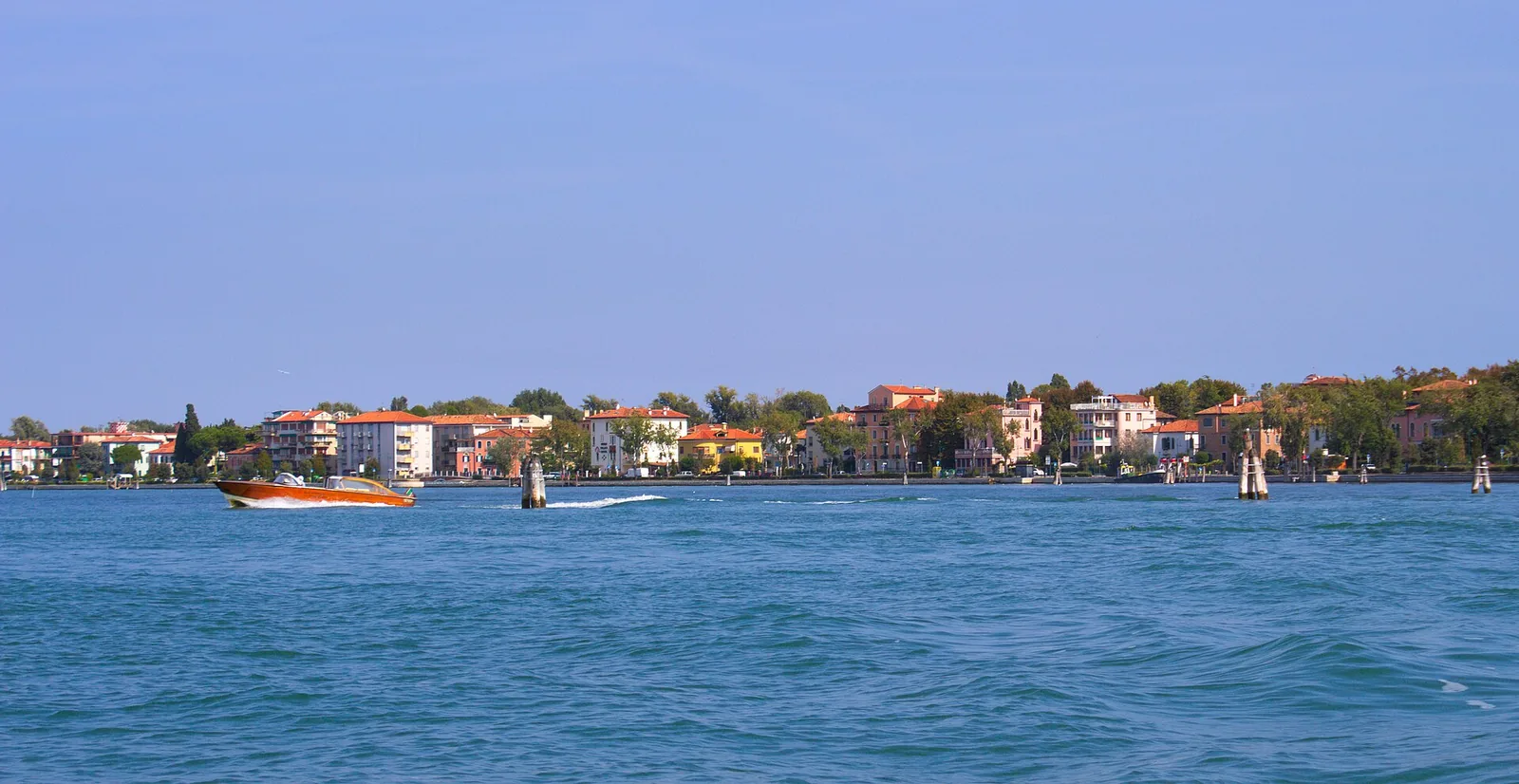
 45.406° N, 12.370° E


Complete guide
Lido di Venezia: beach guide
What the beach is like
The beach of the Lido di Venezia lies in the municipality of Venice, in the province of Venice, and faces the Adriatic. The Lido di Venezia is a thin island that stretches for about 12 km between the Venetian lagoon and the Adriatic Sea. The island is about 12.2 km long and between 196 m and 1.7 km wide. Together with the island of Pellestrina it forms a borough (municipalità) of the municipality of Venice.
Wikipedia links the reputation of the Lido beach to its natural dunes of fine golden sand and to its clean, still water, sheltered by the two large outer breakwaters of San Nicolò and Alberoni. In front of each bathing establishment, smaller breakwaters known as pennelli run out from the shore. Along the coast there is an alternation of the free beaches of San Nicolò and Alberoni, with their old sand dunes, the rocks of the murazzi and the bathing establishments in the central part of the island. The establishments have the typical capanne, large cabins with a veranda and an awning, painted in the colours of the establishment they belong to. Today the beach is used mainly by Venetians.
On the seaward side a long avenue lined with maritime pines runs along the beach, from the area of the former Ospedale al Mare to San Nicolò.
Getting there
The Lido is connected to the city and the mainland only by scheduled waterbuses (vaporetti) and by car ferries. For those already in Venice, the ACTV vaporetto takes about 10 minutes. Arriving at Marco Polo airport, you will find the Alilaguna waterbuses, which reach the Lido in a few stops but take at least 30 minutes.
The main ferry terminal is Santa Maria Elisabetta, which is also where the bus station is. From there the Gran Viale Santa Maria Elisabetta, 27 m wide and about 700 m long, crosses the town from coast to coast and links the waterbus landing stage to the beach. Public transport on the island is provided by Actv bus lines.
When to go
The island hosts the Film Festival every year, between the end of August and the first week of September.
The beach faces south-east. With the levante, scirocco and ostro winds, the wind comes from the sea and the beach is exposed, with waves and rougher water. With the tramontana, ponente and maestrale, the wind blows from the land and the sea close to shore tends to stay calmer. The grecale and libeccio blow across the beach instead. These indications are derived from the orientation of the coast; they are not forecasts.
Seabed and sea
The beach has a sandy bottom. In the 2025 season the European Environment Agency rated the bathing water quality of this stretch as excellent. For Venice, the 2026 Blue Flag (Bandiera Blu) list includes the Lido di Venezia and Alberoni.
The murazzi were built in 1744 to defend the coast from erosion by the sea. These eighteenth-century sea walls run from Alberoni almost to the square in front of the Casinò.
Facilities and free beach
Most of the beach belongs to the various hotels, and anyone staying in a hotel without beach access can use the public beach at the end of the Gran Viale, the most central one, which Wikivoyage describes as a bit crowded. Towards the northern and southern ends of the island there are large public beaches. The Comune di Venezia lists the following free-access beaches on the Lido coast:
- the beach in the San Nicolò protected area, about 600 m long starting from the breakwater;
- the «Lungomare D'Annunzio» beach, between Venezia Spiagge and the former Ospedale al Mare;
- the Murazzi beach, about 5 km long;
- the beach in the Alberoni protected area, about 2.3 km long.
The beach in front of the former Ospedale al Mare, about 450 m long, has been under concession to private operators since 2025. Cleaning of the Lido's free beaches is entrusted to VERITAS S.p.A. and covers only the stretches not under concession to bathing establishments. According to the Comune di Venezia, in 2026 the regular cleaning service for the free beaches ran from 15 May to 15 September, every day from 6 am to 12 noon, and each stretch of beach was cleaned at least once every 10 days. In the same season, start- and end-of-season cleaning was scheduled from 1 April to 15 May and from 15 to 30 September. In the protected natural areas the recycling bins are at the main entrances, not on the sand. Wood and seaweed are not removed, because they are natural elements that are essential for the coastal ecosystem.
For dogs, the municipality has designated the Pet's Beach Area, a 160 m stretch of free beach along the murazzi of the Lido, accessible from via Pigafetta. The requirements include registration with the dog registry, the dog's health booklet and a lead no longer than 1.5 m.
Rules and protected areas
The municipal ordinance on bathing activities currently in force bans lighting fires, camping and dumping rubbish on all the beaches of the Lido and Pellestrina.
The natural areas of San Nicolò and Alberoni, together with Ca' Roman on Pellestrina, belong to the Natura 2000 site IT3250023 «Lido di Venezia: biotopi litoranei». The site is both a Special Area of Conservation and a Special Protection Area, and the Comune di Venezia is its managing body. It is recognised nationally for the nesting areas of the Kentish plover (fratino) and the little tern (fraticello). The Kentish plover lays its eggs in small hollows dug directly in the dry sand, not on the dunes.
In the protected areas dogs must always be kept on a lead no longer than 1.5 m, and away from nests and fences. Walking or stopping on the dunes and in the back-dune areas outside the paths fitted with wooden fencing is prohibited. From 1 April to 30 September cycling along the beach is prohibited, and in the dune areas bicycles may only be pushed by hand along the fenced paths. Actions that cause environmental damage to these areas are punishable under criminal law.
According to the 2026 ordinance of the Coast Guard (Capitaneria di porto) reported by the municipality, in the strip of sea within 500 m of the shore reserved for bathing, motor and sailing vessels may not transit, nor moor or anchor except where authorised.
Nearby
The city of Venice lies 4.5 km to the north-west of the beach as the crow flies. The town of Lido is 1.2 km north of the beach as the crow flies, while the village of Malamocco is 4.5 km to the south-west. In the village stands the church of Santa Maria Assunta, built in the fifteenth century.
At the end of the island, at Alberoni, 7.6 km south-west as the crow flies, is the WWF Oasis of the Alberoni Dunes (Oasi WWF delle Dune degli Alberoni). According to the regional portal Veneto Around Me, the coast here is about 2 km long and fans out from the murazzi towards the tip of the Lido di Venezia.
In the San Nicolò area stand the largest fortification on the island and the old church of San Nicolò, founded in 1044 and rebuilt in the seventeenth century.
On the Lungomare Marconi is the Palazzo del Cinema, which hosts the Venice Film Festival (Mostra del cinema di Venezia) and was inaugurated in 1937.
Sources
- Wikipedia (it) — Lido di Venezia
- Wikivoyage (it) — Lido di Venezia
- Wikipedia (en) — Venice Lido
- Wikivoyage (en) — Venice/Lido
- FEE Italia — Bandiera Blu 2026, elenco spiagge
- OpenStreetMap
- QualeSpiaggia — open data spiagge (CC BY 4.0)
- Pulizia delle spiagge libere | Comune di Venezia.
- Spiaggia comunale per gli animali (Pet's Beach Area) | Comune di Venezia.
- Norme di comportamento nelle aree naturali protette di S.Nicolò, Alberoni e Ca' Roman | Comune di Venezia.
- Aree naturali protette di San Nicolò, Alberoni e Ca' Roman (ZSC/ZPS) | Comune di Venezia.
- Oasi WWF Dune degli Alberoni | Veneto Around Me
- Gli ambienti delle aree naturali di S. Nicolò, Alberoni e Ca' Roman | Comune di Venezia.