
 41.210° N, 13.563° E


Complete guide
Serapo beach (Gaeta): beach guide
What the beach is like
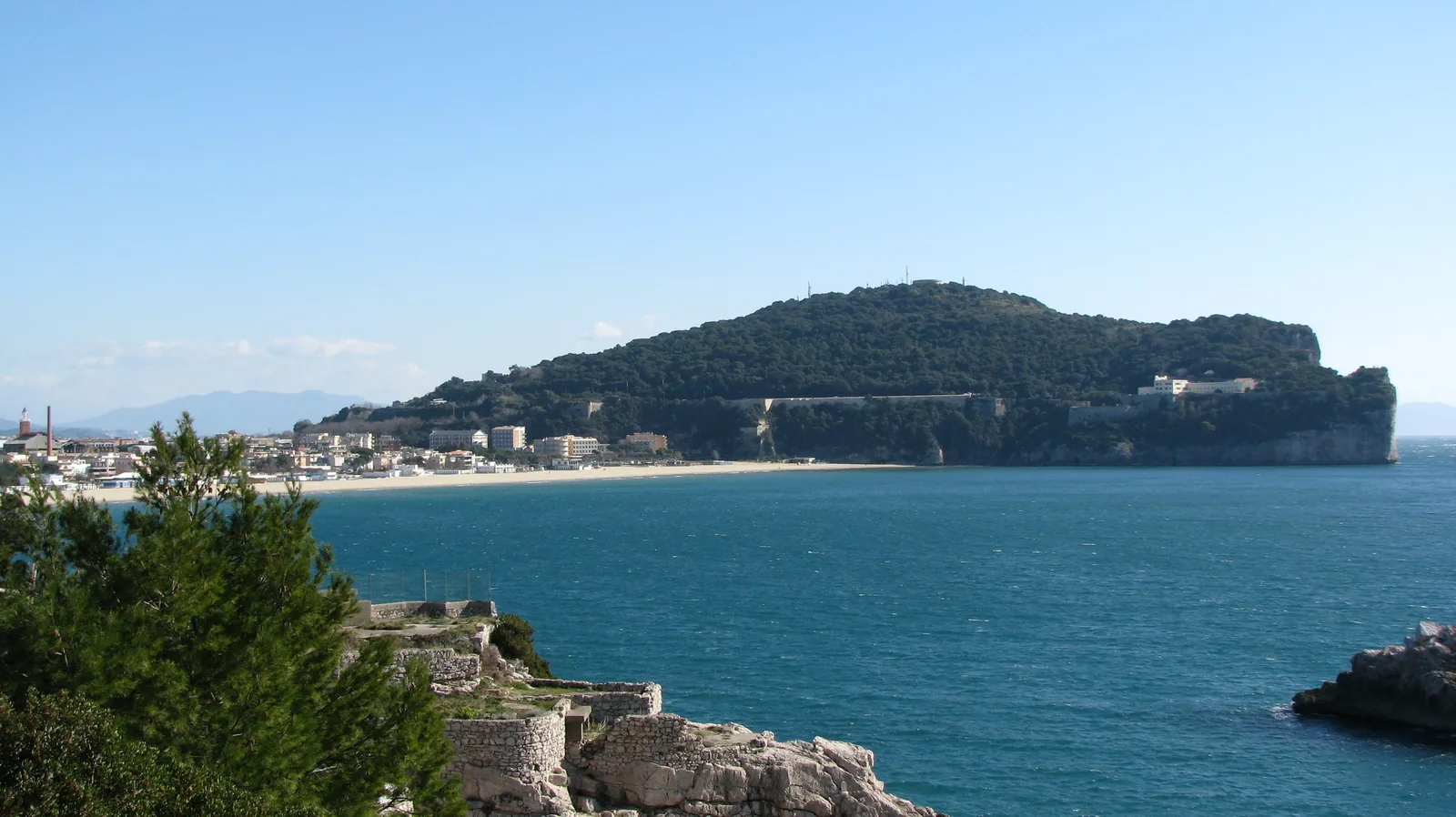
Serapo is a district of the municipality of Gaeta, in the province of Latina, in Lazio. It stretches along the eastern shore of the Montesecco isthmus, between Monte Orlando and the Catena hill. Serapo beach is the main beach of Gaeta. It is about 1.5 km long. Serapo beach reaches 70 m in width at its widest points.
The beach was once a dune. Tonnes of sand were used to make bottles in the glassworks opened in 1911, and the beach became considerably narrower. It is an episode that the people of Gaeta still remember as part of the place's memory. Bathing here flourished from 1926 onwards, when the beach on the northern side of the Montesecco isthmus was closed.
At the north-western end of the beach, not far from the shore, lies the Nave di Serapo, a rock whose elongated shape resembles a ship. According to italia.it, it is a site of marine biodiversity, with rich seabeds suited to freediving and snorkelling. It can be reached by swimming from the shore or on foot from Fontania beach. There are several legends about the origin of the rock: it is said to be the ship of Ulysses turned to stone by the wrath of Circe, or that of a captain who would have suffered the same fate after behaving irreverently during a procession in honour of the Madonna.
Getting there
The beach lies 0.9 km as the crow flies from the reference point of Gaeta, which is to the north. From Rome you can drive along the SS7 state road to Terracina, then take the SR213 Via Flacca towards Gaeta. Another route given is the A1 motorway to Cassino, then the SP229 link road to Formia and then the SR213 Via Flacca, the same route suggested from Naples. By train, Trenitalia services from Rome or Naples reach Formia/Gaeta station. From Formia, the COTRAL urban bus service is indicated. Formia lies 6.7 km as the crow flies north-east of the beach.
When to go
In summer Serapo beach attracts Italian and foreign tourists, who crowd the bathing establishments and the free and equipped beaches. At sunset the sand changes colour, from golden to pink.
Serapo beach faces south. With the north wind (tramontana), the north-easterly (grecale) and the mistral (maestrale) the wind blows from the land: the beach is sheltered and the sea near the shore tends to be calmer. The sirocco (scirocco), the south wind (ostro) and the south-westerly (libeccio), on the other hand, come from the sea and leave it exposed to waves and rough water. The east wind (levante) and the west wind (ponente) hit it side-on. These indications are derived from the beach's orientation; they are not forecasts. Before setting off, it is worth checking the wind and sea forecasts.
Seabed and sea
Serapo beach is sandy. Wikipedia describes it as a low, sandy coast with clear sea. The water is clear all year round because the Monte Orlando promontory shelters it from currents, and the seabed slopes gently. The beach faces the Tyrrhenian Sea. In the 2025 season the European Environment Agency (EEA) rated the bathing water quality of this stretch as excellent.
In 2026 Serapo appears in the list of Blue Flag beaches compiled by the FEE for the municipality of Gaeta, together with Arenauta, Ariana and Sant'Agostino. According to italia.it, the beach has been awarded the Blue Flag several times.
Facilities and free beach
Almost the entire Serapo beach has been granted in concession by the municipality of Gaeta. Besides the bathing establishments there are free and equipped beaches. In the evening during the summer many establishments offer music and entertainment. In the middle of a summer day it is a good idea to bring water, a hat and sunscreen.
Nearby
The beach is closed off by Monte Orlando, a small promontory on which stand the mausoleum of Lucius Munatius Plancus, the sanctuary of the Santissima Trinità and a museum of prehistory. The mausoleum, built in 22 BC, is made of stone blocks and stands on the summit of the hill. The sanctuary of the Santissima Trinità, also known as the Montagna Spaccata, stands on the western flank of Monte Orlando, facing the Serapo district. It was built in the eleventh century by Benedictine monks, over a cleft in the rock that reaches down into the Grotta del Turco.
The promontory is home to the Monte Orlando urban park, which dates from 1986. The surrounding stretch of sea is an Oasi blu managed by the WWF for scientific and educational purposes. According to Wikipedia, the park area offers free climbing and sport climbing (the latter from 1 August to 20 February), cycling, mountain biking, fishing and trekking. On the small beach of Fontania the remains of an ancient Roman villa can still be seen.
To the west, as the crow flies, lie the beaches of Fontanina at 0.7 km, Strega Mugliera at 0.8 km, Quaranta Remi at 1.6 km and Ariana at 1.8 km. Arenauta, also on the 2026 Blue Flag list, lies to the north-west. In 2000 the Arena Beach hosted the European Beach Handball Championships.