
 38.768° N, 16.568° E


Complete guide
Spiaggia di Copanello: beach guide
What the beach is like
The Spiaggia di Copanello lies in the municipality of Stalettì, in the province of Catanzaro, in Calabria, on the Ionian Sea. Copanello is a hamlet of Stalettì on the Ionian coast, south of Catanzaro, and is divided into Copanello alto and Copanello lido. The hamlet lies in the centre of the Golfo di Squillace, on the stretch known as the Costa degli Aranci. Copanello lido stands almost at sea level, at the foot of the Coscia di Stalettì, and has an average altitude of 9 metres.
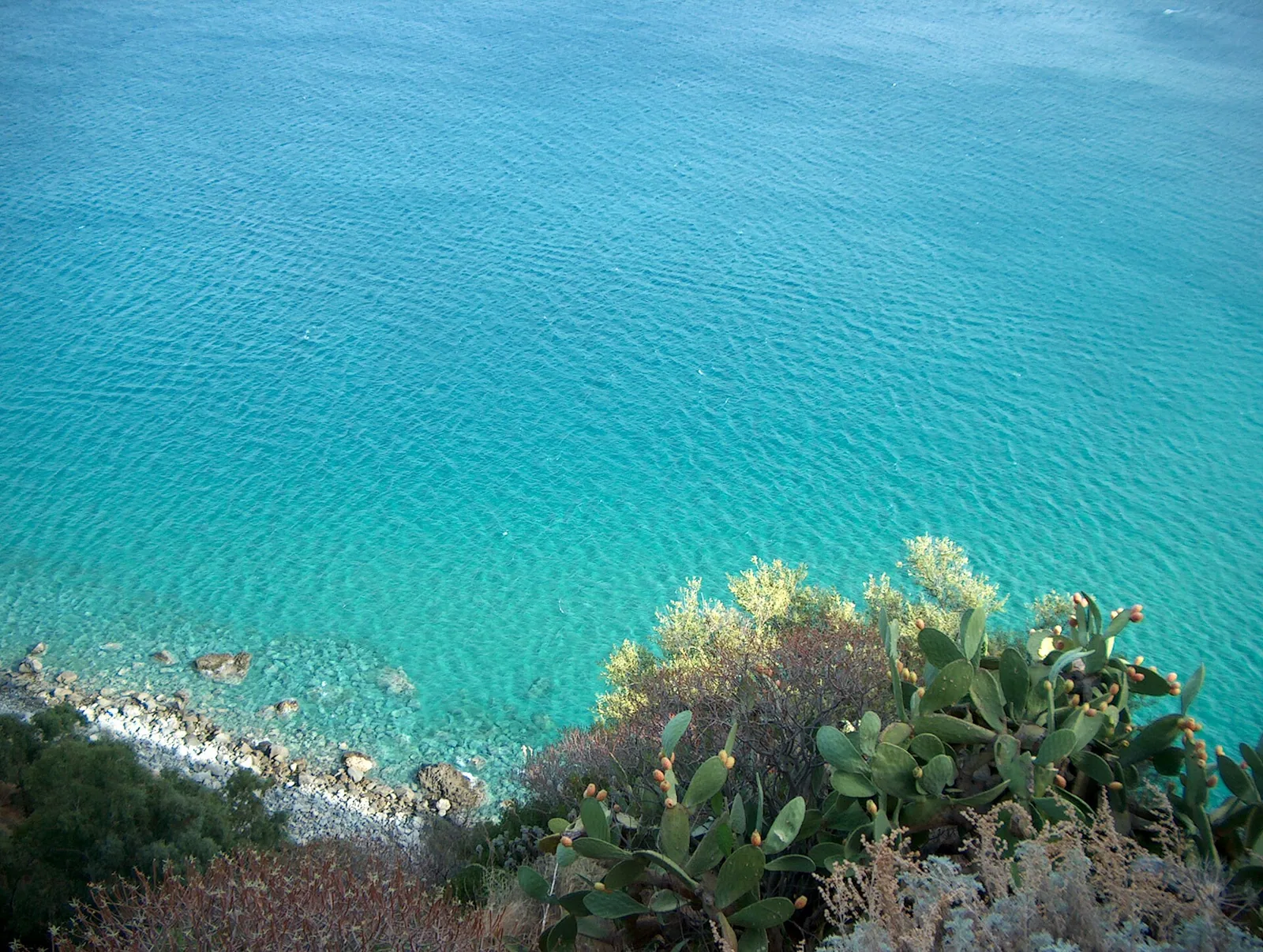
The Copanello area is characterised by headlands of white granite that slope gently down to the sea, creating beaches of fine sand mixed with granite reefs. In places the reefs are pierced by caves into which the sea flows; the best known, according to Wikipedia, is the grotta di San Gregorio, on the border with Caminia. The beach is home to various halophilic organisms, such as sea holly, sea daffodil, tamarisk, sea fennel and salsola. On the cliffs that drop sheer to the sea grow instead caper, the threatened rock pink, sea fennel and golden samphire. From the beach of Copanello lido the Ionian coast can be seen from Isola di Capo Rizzuto to Punta Stilo.
The first holiday homes, built around the '50s, formed the first core of the Copanello lido village. At the end of the '50s an entrepreneur from Catanzaro Lido built beach cabins where the Lido Guglielmo stands today, laying the foundations of the future Rotonda. The Villaggio Guglielmo, whose construction began around the '60s, opened in 1969. At the beginning of the '80s, on a flank of the Coscia di Stalettì, a complex of buildings of 15,000 cubic metres of reinforced concrete, called the Ecomostro, was built. Demolition began on 17 January 2007 and a green area with replanted trees has been created in its place.
Getting there
The beach lies 2.7 km as the crow flies east of Stalettì. Copanello lido is reached from an exit of the state road 106 Jonica that passes under an old railway bridge and leads to piazza Antonio Susanna, in the southern part of the hamlet. From piazza Susanna three parallel streets form the centre of the settlement: via Lucifero, via Cassiodoro and via Lido, which follows the beach. A second access road continues via Cassiodoro, crosses the Alessi river on a bridge and reaches the municipality of Squillace, from where you can join the state road 106.
When to go
The Mediterranean climate, dry and hot in summer, favours the establishment of typically Mediterranean species. According to QualeSpiaggia data, the beach faces east. With the north-easterly (grecale), the easterly (levante) and the sirocco (scirocco), the wind blows in from the sea and the beach is exposed to waves and rough water. With the south-westerly (libeccio), the westerly (ponente) and the mistral (maestrale), the wind blows from the land and the beach is sheltered, with calmer water close to shore. The north wind (tramontana) and the southerly (ostro) blow across the shoreline instead. These are indications derived from the orientation of the coast, not weather forecasts.
Seabed and sea
The Copanello reef begins at the end of the Lido Guglielmo, at the point called punta Cardillo, and runs along most of the Stalettì coastline to beyond the grotta di San Gregorio, at Caminia. It is made up mainly of igneous and metamorphic rock. According to Italia.it, at the edge of the Copanello headland the sea, calm and sheltered by the reefs, is suited to day and night dives.
The rocks and boulders are often covered with brown algae, peacock's tail algae, sponges and sea urchins. Brittle stars and starfish hide in the underwater crevices, and blennies and groupers move among the stones. There are also damselfish, saddled bream, rainbow wrasse, small barracuda, sea breams, grey mullet, red mullet and weevers, which also move over the sand. Octopuses and moray eels live among the rocks, and seahorses can also be found, though they are hard to spot because of their camouflage. In the 2025 season the European Environment Agency rated the bathing water quality of this stretch as excellent. To observe the seabed it is advisable to bring a mask and water shoes.
Facilities and free beach
According to Italia.it, the beaches of Stalettì have been awarded Legambiente's Vele (sails). A regional tourist guide to the Calabrian coasts mentions Copanello, together with Soverato, among the well-known and well-equipped seaside resorts of the Golfo di Squillace. According to the English-language Wikipedia, via Lido is home to a Carabinieri logistics and operations base and a police bathing centre, each with its own private beach.
Nearby
Lido Ulisse lies 1.4 km as the crow flies to the north-east, while the Spiaggia Caminia is 2.2 km to the south. According to Italia.it, the beach of Caminia alternates a long stretch of free beach with a few equipped beach establishments. Italia.it describes the Stalettì coastline as suited to sailing, with stops at the grotta di San Gregorio, at the archaeological remains of the church of Panaja and at the Vasche di Cassiodoro.
According to Italia.it, the Vasche di Cassiodoro are the ancient tanks in which Cassiodorus' monks bred fish, today small pools of lukewarm water. According to the English-language Wikipedia, the tanks can be reached by a path leading down from Copanello alto or by another path, now in poor condition, that follows the coast from Copanello lido. The coast from Copanello to Catanzaro Lido is also called the Riviera di Nausicaa, after the tradition according to which Ulysses was shipwrecked at the mouth of the Alessi river. Squillace lies 5.0 km as the crow flies west of the beach. The centre of Stalettì stands at almost 400 metres and has a view stretching from Crotone to punta Stilo.