
 41.730° N, 12.272° E


Complete guide
Lido di Ostia beach (Rome): beach guide
What the beach is like
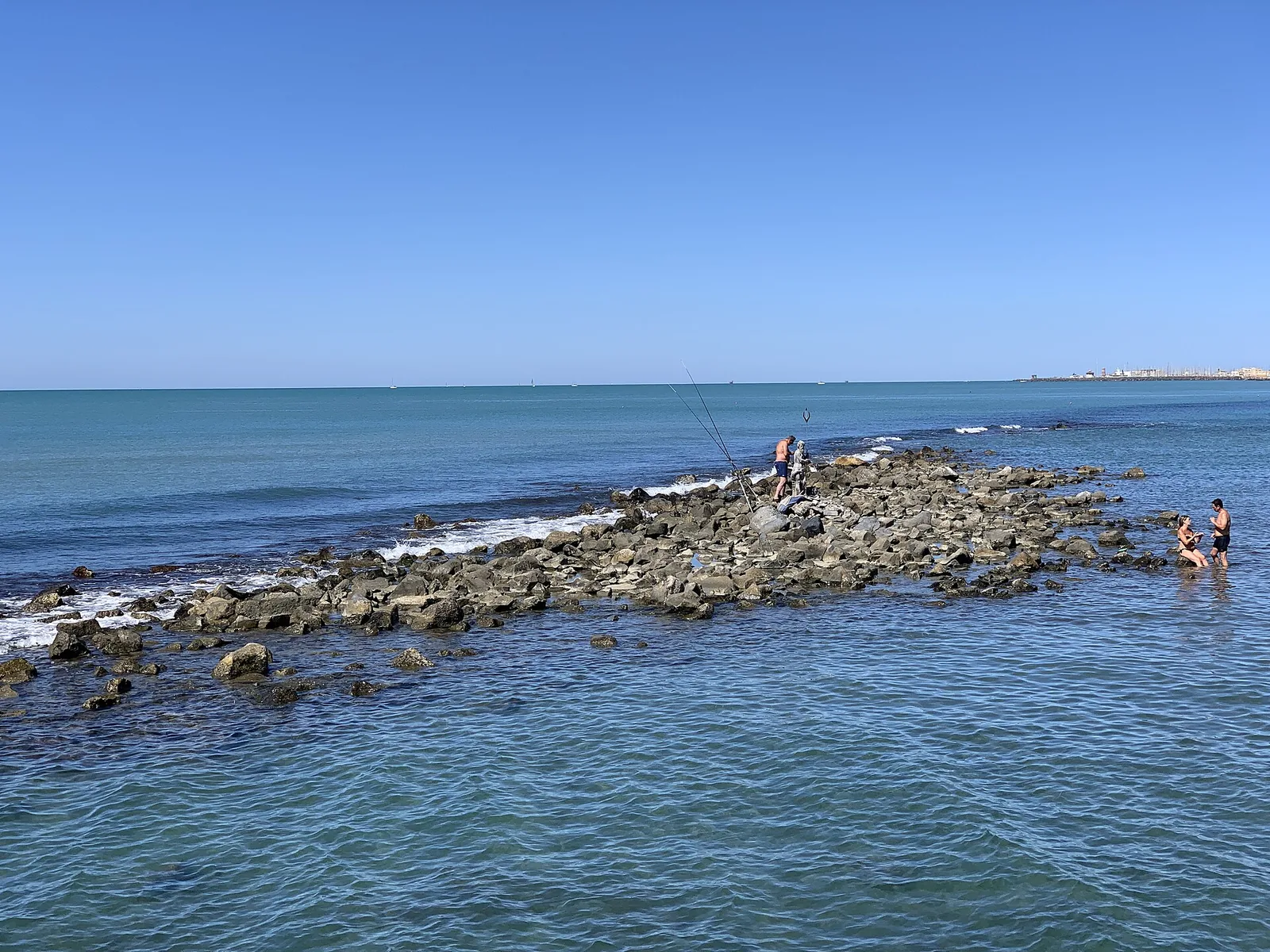
Lido di Ostia beach belongs to the municipality of Rome, in Lazio. The Lido offers everything you would expect from a seaside resort: long sandy beaches, equipped beach clubs, kiosks, sports facilities and a marina. The seafront is 6 km long, from the Porto Turistico di Roma to piazzale Cristoforo Colombo. Long stretches of sand and historic bathing establishments line up along an unbroken promenade of colourful umbrellas and cabins.
As late as the end of the nineteenth century this stretch of coast held only marshes, salt pans and grazing sheep. The resort was born from a land reclamation carried out by settlers from Romagna in 1891. The building that would make Ostia Rome's beach was the stabilimento Roma, opened in 1927 and destroyed in 1943. The bathing establishments, built between the early '20s and the '30s, characterise much of the Ostia shoreline. The oldest is the Battistini, while Wikipedia mentions the Kursaal among the well-known ones. The Lido di Levante has the historic Plinius and Tibidabo establishments.
In piazza dei Ravennati, where the via Ostiense ended, stand the panoramic rotonda and the long Pontile di Ostia. Wikipedia calls the Pontile, dating from 1940, the symbol of the Ostia coast.
Getting there
The reference point of the Lido di Ostia settlement lies 0.5 km as the crow flies east of the beach. The Lido is linked to Rome by the railway and by two main roads, the via del Mare and the via Cristoforo Colombo. The Roma-Lido regional railway, known since 2022 as Metromare, serves the stations of Cristoforo Colombo, Castel Fusano, Stella Polare, Lido di Ostia Centro and Lido di Ostia Nord. The line connects with metro line B/B1 at the EUR Magliana, Basilica San Paolo and Porta San Paolo/Piramide stations.
You can also get there from Rome on a coach service run by Cotral. The nearest airport is Fiumicino international airport, about 12 km away. Wikivoyage lists two free car parks, in via Stefano Carbonelli and in via Giovanni Battista Pastene.
When to go
In the summer months the beaches at Ostia are crowded and full of deck chairs and sunbeds that have to be rented. Summer is hot and at times muggy, tempered by the breeze along the coast, and temperatures often exceed 30 degrees. Winters are mild and rainy.
According to QualeSpiaggia data, the beach faces south-west. With the north wind (tramontana), the north-easterly (grecale) and the east wind (levante) the wind blows from the land: the beach is sheltered and the sea near the shore tends to be calmer. The south wind (ostro), the south-westerly (libeccio) and the west wind (ponente), on the other hand, come from the sea and leave it exposed to waves and rough water. The sirocco (scirocco) and the mistral (maestrale) hit it side-on. These indications are derived from the beach's orientation; they are not forecasts. Before setting off, it is worth checking the wind and sea forecasts.
Seabed and sea
The beach is sandy. The beach faces the Tyrrhenian Sea. In the 2025 season the European Environment Agency (EEA) rated the bathing water quality of this stretch as excellent. The area of Ostia is almost entirely flat, with small rises formed by dunes that are now largely covered by buildings.
Facilities and free beach
On the beach you can go jogging along the shore and play beach volleyball, beach soccer and frisbee. When the wind ruffles the water, you can go surfing, windsurfing and kitesurfing. There is also the Concrete Skate Park, 1,600 square metres devoted to skating and urban art. The Porto turistico di Roma has eighty shops and is suited to walks, jogging and cycling. The marina, dating from 2001, has more than 800 berths. Anyone going to the beach in summer would do well to bring water, a hat and sunscreen.
Rules and protected areas
The Castel Fusano pine forest lies partly within the Riserva naturale statale del Litorale Romano. The natural areas also include the marine area of the Secche di Tor Paterno and the dunes of the Castel Porziano and Capocotta beach.
Nearby
Il Curvone lies 1.2 km as the crow flies to the south-east, and Idroscalo beach 1.6 km to the north-west. The Canale dei Pescatori free beach is 2.8 km as the crow flies to the south-east. The Cancelli coastal strip includes 5 km of nature areas with sand dunes and Mediterranean scrub. The long beach known as the Cancelli once belonged to the presidential estate of Castelporziano and was donated to the public by the President of the Republic, Giuseppe Saragat.
The Borghetto dei Pescatori, between the coast and the Castelfusano pine forest, hosts the boat procession with the Madonna Stella Maris, followed by the Marriage with the Sea. Every year at the end of August it hosts the Sagra della tellina, which dates back to 1963. Ostia Antica, with its archaeological park, lies 5.1 km as the crow flies to the north-east. In the Lido di Ponente stands Tor San Michele, a fortified tower built in the mid-sixteenth century to a design by Michelangelo.