
 40.256° N, 9.625° E


Complete guide
Cala Fuili: guide to the cove at Dorgali
What the beach is like
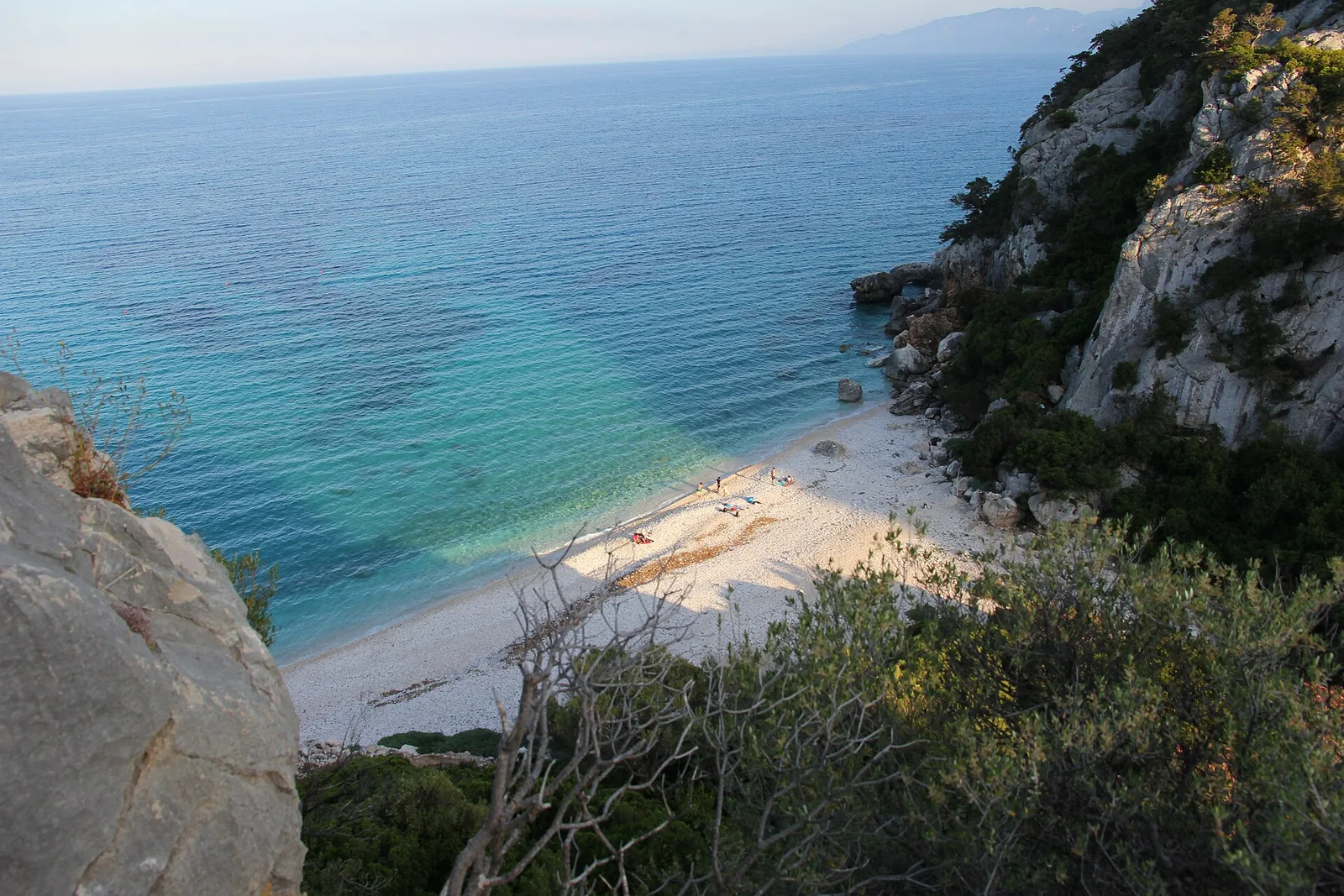
Cala Fuili lies in the Gulf of Orosei (golfo di Orosei), in the municipality of Dorgali, in the province of Nuoro. The village of Cala Gonone lies 3 km to the north of the beach as the crow flies. Cala Fuili lies along the coast south of Cala Gonone. According to SardegnaTurismo, the official tourism website of the Sardinia Region, it is a small, panoramic cove, not far from the Bue Marino caves.
SardegnaTurismo describes a beach of white sand mixed with stones, with rocks breaking the surface. QualeSpiaggia data, taken from OpenStreetMap, classify the surface as pebbles. The cove is surrounded by rock walls that draw many climbers every year. Cala Fuili is also recommended for people who go trekking, canyoning, diving and snorkelling. The cove appears in the set of the 1974 film Travolti da un insolito destino, starring Mariangela Melato and Giancarlo Giannini.
Getting there
You get to Cala Fuili from Cala Gonone by taking viale Bue Marino and carrying straight on. It is the last cove that can be reached by car or bike from Cala Gonone: the road ends where the descent on foot to the beach begins. The beach is reached by going down a staircase cut into the rock and crossing a dense wood of Mediterranean scrub. According to SardegnaTurismo, the view is worth the tiring walk. The SardegnaTurismo page lists entry as free.
According to the SardegnaTurismo page on Ziu Martine, Cala Fuili is the last beach that can be reached from the panoramic road starting in the village of Cala Gonone, a few hundred metres past Ziu Martine. According to Wikivoyage, in summer Olbia airport is linked to Dorgali by the Deplano bus line to and from Cala Gonone. From Nuoro you can travel on the ARST 520 line. The SS 125 Orientale Sarda road runs through the town of Dorgali on the stretch between Baunei and Orosei. For the way down and back up, comfortable shoes and enough water are needed.
When to go
According to QualeSpiaggia data, calculated from the orientation of the coast, the beach faces east. Based on orientation alone, it is sheltered from the south-west wind (libeccio), the west wind (ponente) and the mistral (maestrale), which blow from the land. The north-east wind (grecale), the east wind (levante) and the sirocco (scirocco), on the other hand, come from the sea and can bring waves and choppy water close to shore. The tramontane (tramontana) and the south wind (ostro) blow across the shore. This is an indication derived from orientation, not a forecast. In the middle of a summer day it is worth bringing some shade.
Seabed and sea
At Cala Fuili the seabed is shallow and the sea shades from green to turquoise. The SardegnaTurismo page on Ziu Martine also credits Cala Fuili with a shallow seabed and very clear water. In the 2025 season the bathing water along this stretch was rated excellent by the European Environment Agency. The sea at Cala Fuili is the Tyrrhenian (Tirreno). Among stones and rocks, water shoes can be useful.
Nearby
The beach of Ziu Martine lies 0.5 km to the north of Cala Fuili as the crow flies. The shore of Ziu Martine stretches for about 300 metres, half of which is taken up by rock outcrops. At Ziu Martine, light sand mixes with smooth black pebbles, and the seabed is clear and pebbly. The beach of Ziu Martine lies within the Golfo di Orosei and Gennargentu national park, a protected area of 74 thousand hectares.
The beach of Tziu Santoru lies 2 km to the south of Cala Fuili as the crow flies. The path to Cala Luna starts from the cove: the route takes an hour and a half, with ups and downs along the coast. Cala Luna lies 3.3 km to the south of Cala Fuili as the crow flies. Cala Luna is an inlet cut into the cliffs, with an 800-metre strip of very fine golden sand. The seabed of Cala Luna, shallow for the first few metres, quickly becomes deep. In the wood behind the small lake of Cala Luna there are a kiosk and a bar-restaurant. Lina Wertmuller's 1974 film Travolti da un insolito destino nell'azzurro mare d'agosto used Cala Luna as its setting. Cala Luna lies at the mouth of the rio Illune; the mouth marks the boundary between the municipalities of Baunei and Dorgali.
The Bue Marino caves take their name from the monk seal, which local people called bue marino (sea ox). According to SardegnaTurismo, since the fifties the caves have been one of the main attractions of the Gulf of Orosei, and they belong to the karst system of the codula di Luna. The caves are 15 kilometres long in total, and the southern branch can be visited along equipped, lit routes for about 900 metres. The northern branch, which has become fossil because karst activity has stopped, is not accessible. According to SardegnaTurismo, the guided visit lasts about an hour, and the caves are reached by boat services from the harbours of Arbatax, Cala Gonone, La Caletta, Orosei and Santa Maria Navarrese. Inside the Bue Marino caves there are rock carvings dating back to the Neolithic.
Sources
- Cala Fuili | SardegnaTurismo - Sito ufficiale del turismo della Regione Sardegna
- QualeSpiaggia — open data spiagge (CC BY 4.0)
- Wikivoyage (it) — Dorgali
- Wikipedia (en) — Cala Fuili
- OpenStreetMap
- Ziu Martine | SardegnaTurismo - Sito ufficiale del turismo della Regione Sardegna
- EEA — Bathing water quality 2025 (IT020091017006)
- Cala Luna | SardegnaTurismo - Sito ufficiale del turismo della Regione Sardegna
- Grotte del Bue Marino | SardegnaTurismo - Sito ufficiale del turismo della Regione Sardegna